


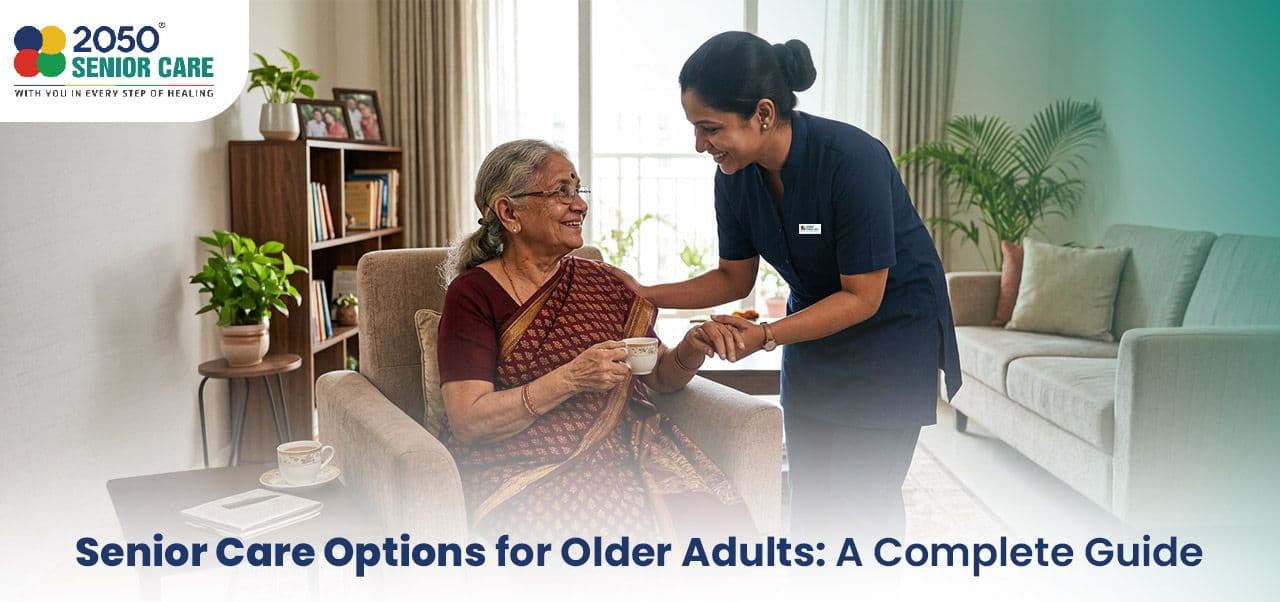
Choosing care for an aging parent or family member can feel confusing. Should they stay at home with some help? Do they need a trained caregiver? Or would a more supported living setup be better?
According to a Government of India update published in March 2026, the population aged 60 and above is expected to reach 23 crore by 2036, or nearly 15% of the population. Another 2026 government update noted that 23.8% of people aged 60 and above have at least one difficulty with daily activities, such as bathing, dressing, eating, or moving around.
This is why elder care services in India are becoming an important part of family planning. The good news is that senior care is not one fixed option. It can be as simple as a few hours of help at home or as structured as assisted living or nursing support.
Senior Care Can Mean Different Things for Different Families
One senior may only need help with meals and medicines. Another may need support with bathing, dressing, or walking. Someone else may need supervision during most of the day.
That is why it helps to think of senior care as a range of services. Families can start with the level of support needed now and increase it later if health or mobility changes.
The right care should make daily life easier without taking away independence unnecessarily.
Which Type of Senior Care May Be Suitable?
Different services are designed for different needs. A simple way to understand them is to match the support required with the care option.
| If a senior needs... | A suitable option may be... |
|---|---|
| A few hours of help at home | Home care |
| Daily help with personal routines | Professional caregiver services |
| Regular support in a residential setting | Assisted living services |
| Medical or nursing support | Nursing care |
| Recovery support after surgery or illness | Rehabilitation |
| Extra supervision for memory problems | Memory care |
These options can also work together. A senior receiving home care for elderly people may still need physiotherapy, doctor visits, or nursing support for a short period.
Care needs can change, so the arrangement should be flexible rather than permanent from day one.
When Is Home Care a Good Choice?
Home care can work well for seniors who are comfortable in their own home and can still manage many things independently.
Support may include bathing, dressing, meals, medication reminders, walking, light household tasks, or companionship. Some seniors may need help only for a few hours, while others may need support for most of the day.
The home itself should also be safe. Poor lighting, slippery bathrooms, difficult stairs, or the lack of quick emergency support can become important as mobility changes.
What Does a Professional Caregiver Do?
A professional caregiver helps with everyday activities that may have become difficult or unsafe.
Professional caregiver services can include personal care, dressing, meals, mobility support, transfers from bed to chair, medication reminders, and companionship. A caregiver may also notice changes such as poor appetite, confusion, weakness, or difficulty walking.
A caregiver is not the same as a nurse or doctor. Medical procedures and clinical decisions should always be handled by trained healthcare professionals.
When Does Assisted Living Make More Sense?
There may come a point when a few hours of home support are no longer enough.
A senior may need help several times a day, feel unsafe living alone, struggle with meals and medicines, or spend most of the day without company. In these situations, assisted living services may be worth considering.
Assisted living usually combines accommodation with meals, personal care, medication support, mobility help, housekeeping, activities, and access to health support. The aim is to provide regular help while still allowing seniors to make choices and stay involved in daily life.
How Can Families Know When More Help Is Needed?
The signs are often visible in everyday routines before a major problem happens.
Families may notice that:
- Medicines are being missed
- Meals are skipped
- Bathing or dressing has become difficult
- There have been falls or near-falls
- Walking around the home feels unsafe
- Appointments are being forgotten
- Memory changes are becoming more noticeable
- The senior is spending most of the day alone
- Family members are finding it hard to manage care consistently
One change may not mean that a new care arrangement is needed. But several changes together can be a sign that the current level of support needs to be reviewed.
A Better Way to Choose the Right Care
Instead of starting with “Which service should we book?”, it is often easier to start with the senior's day. Can they get out of bed safely? Can they prepare meals? Are medicines taken correctly? Can they use the bathroom without help? Do they feel comfortable being alone for long periods?
Then look at health, safety, and social needs. A senior may be physically independent but still feel isolated. Another may appear active but have memory changes that make living alone risky.
The best care option is the one that solves the real problem while keeping as much independence as possible.
What Should Families Check Before Choosing a Service?
A care service should be clear about what support it provides and how that support is managed.
Families should ask about caregiver training, emergency support, medical coordination, hygiene, safety, food, communication, and how the care plan is reviewed. If residential care is being considered, visiting the place can also help families understand the environment.
Cost should be easy to understand as well. Ask what is included, what costs extra, and whether charges change if more care is needed later.
It is also useful to ask one simple question: What happens if the senior’s needs increase? The National Institute on Aging recommends reviewing long-term care arrangements as a person’s needs change.
Senior Care Is Not a One-Time Decision
A senior who needs a little help today may need more support after a fall, illness, surgery, or change in memory.
That does not mean the first care choice was wrong. It simply means care needs can change with time.
Families can review the arrangement every few months and ask whether the senior still feels safe, comfortable, and supported. Good care should be able to change along with the person.
The Bottom Line
Senior care works best when it gives your loved one the right support without taking away their independence. When you understand the available elder care services in India, you can make a more confident choice based on their health, comfort, routine, and future needs.
With 2050 Senior Care, you can explore support that includes trained caregivers, health monitoring, medical assistance, and help with daily activities. If you are unsure what level of care is right, you can book a care assessment and discuss the options that may suit your family best.
Frequently Asked Questions
1. What are senior care services?
Senior care services support older adults with daily activities, health needs, mobility, personal care, and safety.
2. What is included in home care for elderly people?
Home care may include help with bathing, dressing, meals, medication reminders, mobility, and companionship.
3. What do professional caregiver services include?
Professional caregivers can assist with personal care, daily routines, mobility, meals, and basic supervision.
4. When should families consider assisted living services?
Assisted living may be suitable when a senior needs regular help, feels unsafe living alone, or requires more daily support.
5. How do you choose the right elder care services in India?
Start by looking at the senior’s health, mobility, safety, daily routine, and how much support they need each day.